
Showing posts with label Reviews. Show all posts
Showing posts with label Reviews. Show all posts
Friday, October 1, 2010
Review: Metroid: Other M
My long overdue review of Other M is online over at the Comic Book Bin now. It was alright, I enjoyed the majority of my time with it.


Friday, July 30, 2010
Review: Crackdown 2
My review for Crackdown 2 is finally online and over at The Comic Book Bin. Took me a while to buckle down and get it up but it's there.
For the most part I was having fun. I did address some of the issues there are but the biggest by far is the games relation to the first Crackdown; mainly the fact that they're almost the same thing.
For the most part I was having fun. I did address some of the issues there are but the biggest by far is the games relation to the first Crackdown; mainly the fact that they're almost the same thing.
Wednesday, December 30, 2009
Review: Mad Moxxi's Underdome Riot - 7
 Mad Moxxi’s Underdome Riot is the second piece of downloadable content for the first-person shooter Borderlands and is centered around a wave-like cooperative multiplayer style of game play. The content sticks to the game’s gorgeous art style and sense of humour along with introducing new multiplayer modes and several new in game options. However, the content surrounds this new cooperative coliseum style fights completely and can cause the content to come up as slightly shallow in overall value.
The main feature about Mad Moxxi is the new coliseum mode to play in. The object of this mode is to survive a number of rounds while enemies flood into the area. Each round has five waves and contains different enemies and different handicaps or bonuses. These little add-ons can range from increasing the damage or one weapon while reducing the effect of others, to game play devices like making the enemies more accurate, have more ammo, or even taking the players shields away from them. There are a number of handicaps that can be set up for each wave and the more rounds you complete, the more bonuses will be added at one time.
The waves also differ from how the enemies will go about trying to kill you and as you progress through each round they will become smarter and stronger. One nice addition to the rounds is that the final wave of each one is called the Boss Wave and pits you and your team against either one of the main story’s bosses or a new one for this content alone.
The waves are formatted like Horde mode from Gears of War 2 or Firefight from Halo: ODST. Like these other games, the coliseum causes your team to stay together and work as one. Leaving to fight by yourself will quickly lead to death when playing on the higher rounds and finding precise locations to set up a camp is important. Each of the three coliseums are based on areas from the main campaign and are set up in very different ways. For example, The Gully consists of a tall sniper tower with three levels of arena beneath it, while The Angelic Ruins is wide open with not many closed off areas to make a safe place to hide out in.
There are a total of three coliseums and two different round caps to choose from. The first being a short five round game (25 waves in total) and the second being a long 20 round game (100 waves). A short game can take around 30 minutes to complete while the latter can last over four hours. Apart from these three arenas to play in, Mad Moxxi also includes an all new bank system and the ability to unlock two more skill points for your character. The bank is probably one of the more intriguing features to the game. It allows players to stash any of your guns and equipment. You can also purchase bank upgrades that will give you more room to hold your stuff. The bank is a very welcomed feature since you now have a place to hold those weird weapons that you’re only carrying to show off to your friends.
The one downside to this add-on is that it focuses completely on the coliseum battles and nothing else. This causes the content to feel a little short and shallow when you look at what you’re really paying for. Despite some of the matches lasting very long, finding out exactly how to position and use your team over and over can come off as a bit repetitive. With that said, the handicaps for each wave add a random element to each fight and can cause you to mix up each of your formations. This addition greatly s and alters the otherwise monotonous nature of simply kill everything.
Despite the short length of time between this and the previous piece of additional content, Mad Moxxi’s Underdome Riot feels like a solid addition to the game. Even though the arena fights can get repetitive during your third hour of the 20 round games, the number of different bonuses and handicaps can still keep you on your feet. The bank system is very welcomed to anyone who has come across a weak but unique gun that they don’t want to have to sell off in order to keep some inventory room. And to anyone who has hit the level cap - but still wants to upgrade their character - the two unlockable skill points are a great addition. Mad Moxxi’s Underdome Riot not only gets the wave-like cooperative game play right but alters it enough to make it feel new and very exciting.
Overall: 7/10
Monday, December 21, 2009
Review: The Ballad of Gay Tony - 8
Like the first piece of downloadable content added to Grand Theft Auto 4, The Ballad of Gay Tony brings new forms of gameplay and a completely new story. Though the story remains separate from the main game’s campaign, there are enough references and ties between the two games to present a real connection. The story that you play through remains as well written as ever and despite the look of the aging graphics, The Ballad of Gay Tony feels like a solid addition to the already massive game.
You play as Luis Lopez, the body guard of Tony “Gay Tony” Prince, as you help revive the chain of nightclubs that you both have a stake in. Not only has Tony managed to piss off the Russian mob group in Liberty City, but everyone you meet seems to want nothing more than killing the flamboyant business owner. As the trusted friend, you take it upon yourself to win back your enemies by either helping them out, or gunning them down.
A great inclusion to the game is the various references towards events are characters from the main game and even the first piece of downloadable content. Many characters make a return and sometimes even play a more major role in some of the missions. It was great being able to see characters like Roman Belic try and squeeze his way into one of Tony’s clubs. The addition of these constant references really make the world created in Grand Theft Auto 4 and The Ballad of Gay Tony much bigger and real.
The Ballad of Gay Tony’s strongest aspect is the writing behind the characters. Each one of them either feels very realistic or completely ridiculous. A personal favorite is Tony himself. He is set up as this rich club owner who seems to have it all. However, as the story plays out, we learn his life is far from glamorous. The game does a great job at showcasing this drugged up shell of a man. Another great character is the main protagonist Luis. The drama he has to go through to keep his boss from killing himself and getting himself killed is very well handled. Along with the constant issues we are presented about Luis’s home life, we can see how crummy this character really has it. On the more playful side we have Yusuf. His only dream is to build the biggest skyscraper in all of liberty city. Along with that goal, he wants to spend all the money he can. This is most often played out by getting Luis to steal him helicopters or even tanks. The mix between the two contrasting personality types really helps this content pack to live up to the tone set in Grand Theft Auto 4 but also relate back to some of the previous, less serious Grand Theft Auto games.
As always, the conflicting parties in the story will have the main character performing various tasks for them and this is where the main gameplay comes in. These missions can be anything from car pursuits to shooting your way out of a museum. Along with these, the always amusing helicopter missions make a return. The game can be quite fun when you are instructed to take out a ferry ship with your missile equipped copter.
A new type a mission is included in this download pack known as base jumping. These will have you either ride a helicopter into the air or get to a very high location and jump out. From here you can freefall down until you wish to pull the ripcord to release your parachute. With the ability to play these outside of story related missions, the game becomes all that much more enjoyable. The map is filled with dozens of different base jumping missions and they all differ by either the location and height or if you are intended to land on a moving object or not.
One of the main downsides to the game is the return of the incredibly awkward driving mechanic. Like the original Grand Theft Auto 4, the cars’ handling is very different than most driving related games and the learning curve can last you longer than the time spent going through the story. The problem is that the vehicles feel as if they’re constantly on ice. The inclusion of a hand brake doesn’t help much either. Many times I found myself performing donuts when I had anticipated an easy right turn. Though the cars can become easier to drive when finding and unlocking better vehicles, the main ones that are given to you for each mission aren’t very fun to use at all.
The final complaint to be had with this download pack is the visuals. Since they’re almost identical to the main game’s, they begin to look a little dated. The character models don’t have the same realism they had last year and some come off looking a little to polygonal. However, the environments remain good and the lighting and water effects throughout the enormous Liberty City is just great.
The Ballad of Gay Tony is a solid piece of additional content that is worth the $20 being charged for it. Whether you’re just into the series’ fiction or want to find new ways to cause havoc in the streets, this game has it covered. Despite the steep learning curve to the cars, there are many ways of becoming accustomed to it and with all the replay ability, you’ll get used to it in the end. This pack delivers what you’d expect and want when continuing a Grand Theft Auto game and it does very well in doing so.
Overall: 8/10
You play as Luis Lopez, the body guard of Tony “Gay Tony” Prince, as you help revive the chain of nightclubs that you both have a stake in. Not only has Tony managed to piss off the Russian mob group in Liberty City, but everyone you meet seems to want nothing more than killing the flamboyant business owner. As the trusted friend, you take it upon yourself to win back your enemies by either helping them out, or gunning them down.
A great inclusion to the game is the various references towards events are characters from the main game and even the first piece of downloadable content. Many characters make a return and sometimes even play a more major role in some of the missions. It was great being able to see characters like Roman Belic try and squeeze his way into one of Tony’s clubs. The addition of these constant references really make the world created in Grand Theft Auto 4 and The Ballad of Gay Tony much bigger and real.
The Ballad of Gay Tony’s strongest aspect is the writing behind the characters. Each one of them either feels very realistic or completely ridiculous. A personal favorite is Tony himself. He is set up as this rich club owner who seems to have it all. However, as the story plays out, we learn his life is far from glamorous. The game does a great job at showcasing this drugged up shell of a man. Another great character is the main protagonist Luis. The drama he has to go through to keep his boss from killing himself and getting himself killed is very well handled. Along with the constant issues we are presented about Luis’s home life, we can see how crummy this character really has it. On the more playful side we have Yusuf. His only dream is to build the biggest skyscraper in all of liberty city. Along with that goal, he wants to spend all the money he can. This is most often played out by getting Luis to steal him helicopters or even tanks. The mix between the two contrasting personality types really helps this content pack to live up to the tone set in Grand Theft Auto 4 but also relate back to some of the previous, less serious Grand Theft Auto games.
As always, the conflicting parties in the story will have the main character performing various tasks for them and this is where the main gameplay comes in. These missions can be anything from car pursuits to shooting your way out of a museum. Along with these, the always amusing helicopter missions make a return. The game can be quite fun when you are instructed to take out a ferry ship with your missile equipped copter.
A new type a mission is included in this download pack known as base jumping. These will have you either ride a helicopter into the air or get to a very high location and jump out. From here you can freefall down until you wish to pull the ripcord to release your parachute. With the ability to play these outside of story related missions, the game becomes all that much more enjoyable. The map is filled with dozens of different base jumping missions and they all differ by either the location and height or if you are intended to land on a moving object or not.
One of the main downsides to the game is the return of the incredibly awkward driving mechanic. Like the original Grand Theft Auto 4, the cars’ handling is very different than most driving related games and the learning curve can last you longer than the time spent going through the story. The problem is that the vehicles feel as if they’re constantly on ice. The inclusion of a hand brake doesn’t help much either. Many times I found myself performing donuts when I had anticipated an easy right turn. Though the cars can become easier to drive when finding and unlocking better vehicles, the main ones that are given to you for each mission aren’t very fun to use at all.
The final complaint to be had with this download pack is the visuals. Since they’re almost identical to the main game’s, they begin to look a little dated. The character models don’t have the same realism they had last year and some come off looking a little to polygonal. However, the environments remain good and the lighting and water effects throughout the enormous Liberty City is just great.
The Ballad of Gay Tony is a solid piece of additional content that is worth the $20 being charged for it. Whether you’re just into the series’ fiction or want to find new ways to cause havoc in the streets, this game has it covered. Despite the steep learning curve to the cars, there are many ways of becoming accustomed to it and with all the replay ability, you’ll get used to it in the end. This pack delivers what you’d expect and want when continuing a Grand Theft Auto game and it does very well in doing so.
Overall: 8/10
Saturday, October 10, 2009
Review: Halo 3: ODST - 8
Halo 3: ODST is a first person shooter set in the Halo universe and prequel to the original Halo 3 game. The controls and overall game play are very similar to Halo 3 but ODST contains enough new features to make this feel like a new experience. However, the similarity between the two games can cause ODST to come up a bit short.
You play as a no-named Orbital Drop Shock Trooper who, along with his teammates, encountered problems when entering the atmosphere. After awaking and noticing you have been separated from your squad, you set out to round up your teammates. As you search the area, you will come across several objects that had been used from your team several hours previous and upon finding them, a new mission will begin. Each of these separate missions has you take command of a new teammate as you discover what happened to them during the crash landing.
Each mission brings something new and different for you to utilize. Some will have you focusing on using your sniper rifle while others will want you to drive throughout the level using huge laser cannons against the enemy. The diversity is quite nice and shows how much this game has to offer.
You also have the choice to play through the campaign with up to three addition players. This can really skyrocket the amount to do in the game since tackling harder difficulties seems like a more achievable task. This also allows you to discover new ways to complete the levels and missions. One downside to the cooperative play is that there is no system in place to continue a game is a player chooses to quit. If at any point one of the players drops out the game, the rest will experience the game freezing and then kicked back out to the lobby. This is a really bummer since random loss of connections can cause you to have to replay many areas.
The story telling in the game is a nice touch since you only get bits and pieces of the whole story. Finding new items from your team and engaging in each teammate’s perspective reveals more to the story. However, the main characters in the game come off as quite stiff and easy to forget. Since you only play as each one for around ten to fifteen minutes, there isn’t enough time to develop an attachment to any one person. Even playing as the rookie for the duration of the over world section feels the same since your main character stays mute throughout the game.
There is the addition of collectable audio logs spread out through the game. Each one is a piece of a side story involving a civilian girl and the enemy Covenant. The depth and character development in each of these are great and along with the ability to play them while searching the over world for more of your teammate’s items can cause these characters to become far more interesting than the main campaign ones. In addition, the game tries to help guide you to these hidden logs by having indicators point you in the right direction. What might look like a construction sign telling you to “stay right” may actually be a hint on which path to take forward.
The controls and game play are very similar to Halo 3’s but there are several new features. The most noticeable is the night vision mode you have. Pressing the X button will allow you to see things more clearly. Not only does it brighten up darker areas, but it outlines your comrades in green and the enemies in red. These bright contour lines are great for being able to find hidden audio logs or items and it can even help you against enemies with invisibility. The only downside to using this mode is it takes some of the detail away from the environment. Though, the look of the contour outlining is nice but not being able to see the great looking atmosphere is a downside.
It’s safe to say that this game looks wonderful. The dark environment you explore as the rookie looks great when illuminated by the small fires and broken street lights. And when playing in the day time missions the bright colors and detail is very well done. Your night vision mode even changes the detail a bit and even though it lowers the quality, the style used with its colorful contours lines is great in its own way.
Partnered with the great visuals, ODST’s audio and soundtrack is perfect. The soft and slow music played when exploring the main over world is great and fits in with the lost and lonely feel to it. At the same time, the music is just up beat enough to fit in with the various enemy encounters. And when playing through your teammates missions to the fast paced music as they fight their way to extraction is just great. The music is this game is a real treat.
Another new feature ODST brings is the Firefight multiplayer mode. This is a standard survival game mode that can be played with up to four players cooperatively. Much like Horde mode from Gears of War 2, this setting stations you in a small area where you need to survive as long as possible while more and more enemies enter and begin to fight you. To keep things interesting, the game awards score multipliers and bonus points when you pull off certain moves. Killing two enemies in quick succession will double your score while using a grenade to blow up several at once will increase it that much further. This is a really great mode to play with your friends and adds loads of replay value.
Halo 3: ODST comes across as a bit of a double edged sword. For anyone looking something new and different from the typical Halo game won’t be completely satisfied. The game stays very true to the series’ formula and delivers on all accounts. But if you are no huge fan of the original trilogy, you may just find this to feel more like an expansion of the third game. Though the new multiplayer mode and great visual/audio choices make this game feel just different enough to keep it separated. Overall the game looks and handles very well and with all the audio logs to discover and story to unlock, there’s a lot going on.
Overall: 8/10
Monday, August 17, 2009
Review: Wii Sports Resort - 9
Wii Sports Resort is the second game to feature the Wii Sports name and improves on everything from the first one. The main difference is the inclusion of the Wii MotionPlus peripheral that comes packaged with the game. Using this allows for a much higher level of sensitivity and really makes playing the game feel great. The 1:1 controls make you feel like you’re performing the actions more than any other game on the Nintendo Wii and boost this game beyond any previous mini game compilation.
The bundled Wii MotionPlus accessory plugs into the bottom of the Wii remote controller and adds more sensitivity and greater accuracy to the movements you make. For example, instead of the game knowing you made a diagonal slashing movement with your hand, it now knows the exact angle you swung your controller at. This causes each one of the games to feel more realistic and bring a new level of control to the console. The downfall with this is that it is mandatory that you have the Wii MotionPlus accessory in order to play. Wii Sports Resort is only shipped with one of these so you will not be able to play any multiplayer unless you purchase an addition peripheral. This brings the game up to around an $85 retail value just for wanting to play with one other person; any more people wanting to play at once will bring the price up that much higher.
This leads to the biggest problem with Wii Sports Resort; it can be a little boring when playing the game alone. Playing the game single player isn’t the best use of this game. Wii Sports Resort is designed as a multiplayer game and each activity is short enough to keep a group of players’ attention for a good deal of time. Taking the multiplayer aspect out of it defeats this purpose and will shorten your play time quite a bit.
Wii Sports Resort plays off the same gameplay set up as the first game by giving you a selection of sports and activities to play. However, this time there are far more options to choose from - five in the original and now twelve in this game. These choices consist of activities like Archery, Swordsplay, Basketball, Table Tennis and etc. Golfing and Bowling are also part of the list and make a return from the first Wii Sports game. Each game is set up very differently than the others and require much different hand movements in order to play them. Games like Frisbee will have you gently flicking the Wii remote horizontally while Canoeing will have you make stroking motions.
Of course, not all the activities are the best or work well with these controls. For example, Cycling has you shake the Wii remote and nunchuk up and down to make the bicycle move. Obviously this isn’t how you would normally ride the bike. It would have been better if they at least made you move the controllers in a circular motion to replicate the pedaling motion. However, most of the other games feel realistic and great to play.
Swordsplay is one that stands out above the rest by letting you take place in sword fights. You have the option to swing your sword in any direction you want. The ability to block is what really brings in some strategy to this game. Holding down the B button will cause your character to begin his blocking stance. From here, you need to watch your opponent’s strikes so you know which way to block. If your enemy attacks vertically, you need to block horizontally (and vice versa). This really brings some depth to the game for it allows you to strike back against anyone who thinks just waving the remote as fast as possible will lead to an easy win.
Frisbee is probably the next most intuitive since it allows you to tilt your disk to perform curves. Holding the Frisbee level will make it fly straight and the speed you flick, along with the timing of your release, will change its flight. Tilting it down will curve it in opposite direction as an upwards tilt – if you throw right handed and tilt it down, the Frisbee will fly more left. Along with the option to throw forehand the game really allows for some skilled throws. With the added difficulty of more targets to hit during one throw and wind speed, the game can get very challenging.
Another fan favorite is Archery. You play with the Wii remote in your left hand and hold it vertically in order to aim. Holding down the nunchuk’s Z button will zoom in while pulling back your right hand – that holds the nunchuk controller – will zoom in even further. From here you can carefully take aim as the cross hair-like ring slowly gets tighter. This allows for more accurate shots. The target is set up in rings; hitting closer to the center will award more points while the outer rings will be less. There are also many levels to play on and three difficulties to try out. Each stage will be at a new area on Wuhu Island (where Wii Sports Resort takes place) and shows off some of the unique characteristics of the area. Some courses will be on a rickety bridge while others will have your shooting inside a volcano. The higher difficulties will also add obstacles between you and the target. This allows for less planning time since you have a smaller window to shoot through. To make things more interesting, every stage has a hidden target to be found on it. These targets are much farther away than the main target and require a very exact shot to hit. This is a great feature that can keep you coming back for more, even if you’ve already mastered the highest difficulty.
A personal favorite is the Air Sports category. It consists of Skydiving, Dogfight and Island Flyover. Skydiving has you fall out of a plane and tilting the Wii remote in order to drift around and catch onto other skydivers. After you link up with someone a camera will count down and take your picture. Dogfight is the only competitive mode in this category and has you controlling a plan and using the A button to try and shoot at the opponents. You are set up with balloons that act like points and there are several locations on the island that will respawn with new ones. Your mission is to shoot down the other planes’ balloons while trying to collect the most for yourself.
Island Flyover is my personal favorite from all the Air Sports. You get five minutes to fly a plane all around Wuhu Island as you search for special locations. Each location is indicated by an icon that floats above it. Flying into the icon will award you with “collecting” it and some information about the spot. What makes it so great is that you can see everything the island has. This can range from the Swordsplay ring and the Bowling alley all the way to the inside of the volcano or the winding tunnels underneath and throughout the island. It really is a lot of fun to search for these spots while getting to see and learn more about this unique and fun resort. This mode can be played at three different day times: Daytime, Evening and Night. There are 80 spots to find and new information will be posted there depending on the time of day.
Along with all the sports to play, each on has its own set of stamps. These act like achievements that you can unlock during the game. For example, Island Flyover has one for collecting all 80 information points. Some are as easy as that, while others can be incredibly hard. You will come across ones asking for a bulls eye on every Archery course or completing the Table Tennis’s return challenge with over 200 points. These are a great addition to the game since they boost the replay value through the roof. You will constantly have something to try and unlock. Along with that, you are awarded levels each time you play the games. Each game has its own level to increase and doing well will make it move up higher. After reaching level 1000 you will unlock harder difficulties and from there can strive to reach level 2000. This makes the game last so much longer and allows the player something to work towards no matter how good they have become. This also helps give someone playing this game by themselves more to do. The inclusion of these stamps really helps fight the slightly dull aspect to playing Wii Sports Resort alone.
The graphics are also nice as far as the Nintendo Wii goes but do look updated from the original Wii Sports game. The water is great looking and despite some odd ripple effects it looks very realistic. There are also some nice sunlight effects to be seen, for instance, when playing Island Flyover during the evening. Other than that, you’re getting pretty standard Wii graphics. The music in the game is also nice and calm to really drive home the ease of play this game has. And along with cheery congratulatory remarks from the game when playing, it becomes that much more enjoyable.
Overall Wii Sports Resort holds up as one of the best mini game collections on this console to date. It improves on everything the original game has and adds tons of new features. Almost every sport is incredibly enjoyable and can be played for quite some time. The inclusion of a level system and the unlockable stamps lead the game to some very long replay value and cause you to play the activities in ways you wouldn’t normally. The only shortcomings are that playing alone can be a tad dry and with only one Wii MotionPlus accessory bundled with the game, multiplayer can end up costing you more than the standard video game retail price. However, when you do get some friends together, there is so much content for you to explore and enjoy.
Overall: 9/10
The bundled Wii MotionPlus accessory plugs into the bottom of the Wii remote controller and adds more sensitivity and greater accuracy to the movements you make. For example, instead of the game knowing you made a diagonal slashing movement with your hand, it now knows the exact angle you swung your controller at. This causes each one of the games to feel more realistic and bring a new level of control to the console. The downfall with this is that it is mandatory that you have the Wii MotionPlus accessory in order to play. Wii Sports Resort is only shipped with one of these so you will not be able to play any multiplayer unless you purchase an addition peripheral. This brings the game up to around an $85 retail value just for wanting to play with one other person; any more people wanting to play at once will bring the price up that much higher.
This leads to the biggest problem with Wii Sports Resort; it can be a little boring when playing the game alone. Playing the game single player isn’t the best use of this game. Wii Sports Resort is designed as a multiplayer game and each activity is short enough to keep a group of players’ attention for a good deal of time. Taking the multiplayer aspect out of it defeats this purpose and will shorten your play time quite a bit.
Wii Sports Resort plays off the same gameplay set up as the first game by giving you a selection of sports and activities to play. However, this time there are far more options to choose from - five in the original and now twelve in this game. These choices consist of activities like Archery, Swordsplay, Basketball, Table Tennis and etc. Golfing and Bowling are also part of the list and make a return from the first Wii Sports game. Each game is set up very differently than the others and require much different hand movements in order to play them. Games like Frisbee will have you gently flicking the Wii remote horizontally while Canoeing will have you make stroking motions.
Of course, not all the activities are the best or work well with these controls. For example, Cycling has you shake the Wii remote and nunchuk up and down to make the bicycle move. Obviously this isn’t how you would normally ride the bike. It would have been better if they at least made you move the controllers in a circular motion to replicate the pedaling motion. However, most of the other games feel realistic and great to play.
Swordsplay is one that stands out above the rest by letting you take place in sword fights. You have the option to swing your sword in any direction you want. The ability to block is what really brings in some strategy to this game. Holding down the B button will cause your character to begin his blocking stance. From here, you need to watch your opponent’s strikes so you know which way to block. If your enemy attacks vertically, you need to block horizontally (and vice versa). This really brings some depth to the game for it allows you to strike back against anyone who thinks just waving the remote as fast as possible will lead to an easy win.
Frisbee is probably the next most intuitive since it allows you to tilt your disk to perform curves. Holding the Frisbee level will make it fly straight and the speed you flick, along with the timing of your release, will change its flight. Tilting it down will curve it in opposite direction as an upwards tilt – if you throw right handed and tilt it down, the Frisbee will fly more left. Along with the option to throw forehand the game really allows for some skilled throws. With the added difficulty of more targets to hit during one throw and wind speed, the game can get very challenging.
Another fan favorite is Archery. You play with the Wii remote in your left hand and hold it vertically in order to aim. Holding down the nunchuk’s Z button will zoom in while pulling back your right hand – that holds the nunchuk controller – will zoom in even further. From here you can carefully take aim as the cross hair-like ring slowly gets tighter. This allows for more accurate shots. The target is set up in rings; hitting closer to the center will award more points while the outer rings will be less. There are also many levels to play on and three difficulties to try out. Each stage will be at a new area on Wuhu Island (where Wii Sports Resort takes place) and shows off some of the unique characteristics of the area. Some courses will be on a rickety bridge while others will have your shooting inside a volcano. The higher difficulties will also add obstacles between you and the target. This allows for less planning time since you have a smaller window to shoot through. To make things more interesting, every stage has a hidden target to be found on it. These targets are much farther away than the main target and require a very exact shot to hit. This is a great feature that can keep you coming back for more, even if you’ve already mastered the highest difficulty.
A personal favorite is the Air Sports category. It consists of Skydiving, Dogfight and Island Flyover. Skydiving has you fall out of a plane and tilting the Wii remote in order to drift around and catch onto other skydivers. After you link up with someone a camera will count down and take your picture. Dogfight is the only competitive mode in this category and has you controlling a plan and using the A button to try and shoot at the opponents. You are set up with balloons that act like points and there are several locations on the island that will respawn with new ones. Your mission is to shoot down the other planes’ balloons while trying to collect the most for yourself.
Island Flyover is my personal favorite from all the Air Sports. You get five minutes to fly a plane all around Wuhu Island as you search for special locations. Each location is indicated by an icon that floats above it. Flying into the icon will award you with “collecting” it and some information about the spot. What makes it so great is that you can see everything the island has. This can range from the Swordsplay ring and the Bowling alley all the way to the inside of the volcano or the winding tunnels underneath and throughout the island. It really is a lot of fun to search for these spots while getting to see and learn more about this unique and fun resort. This mode can be played at three different day times: Daytime, Evening and Night. There are 80 spots to find and new information will be posted there depending on the time of day.
Along with all the sports to play, each on has its own set of stamps. These act like achievements that you can unlock during the game. For example, Island Flyover has one for collecting all 80 information points. Some are as easy as that, while others can be incredibly hard. You will come across ones asking for a bulls eye on every Archery course or completing the Table Tennis’s return challenge with over 200 points. These are a great addition to the game since they boost the replay value through the roof. You will constantly have something to try and unlock. Along with that, you are awarded levels each time you play the games. Each game has its own level to increase and doing well will make it move up higher. After reaching level 1000 you will unlock harder difficulties and from there can strive to reach level 2000. This makes the game last so much longer and allows the player something to work towards no matter how good they have become. This also helps give someone playing this game by themselves more to do. The inclusion of these stamps really helps fight the slightly dull aspect to playing Wii Sports Resort alone.
The graphics are also nice as far as the Nintendo Wii goes but do look updated from the original Wii Sports game. The water is great looking and despite some odd ripple effects it looks very realistic. There are also some nice sunlight effects to be seen, for instance, when playing Island Flyover during the evening. Other than that, you’re getting pretty standard Wii graphics. The music in the game is also nice and calm to really drive home the ease of play this game has. And along with cheery congratulatory remarks from the game when playing, it becomes that much more enjoyable.
Overall Wii Sports Resort holds up as one of the best mini game collections on this console to date. It improves on everything the original game has and adds tons of new features. Almost every sport is incredibly enjoyable and can be played for quite some time. The inclusion of a level system and the unlockable stamps lead the game to some very long replay value and cause you to play the activities in ways you wouldn’t normally. The only shortcomings are that playing alone can be a tad dry and with only one Wii MotionPlus accessory bundled with the game, multiplayer can end up costing you more than the standard video game retail price. However, when you do get some friends together, there is so much content for you to explore and enjoy.
Overall: 9/10
Wednesday, August 5, 2009
Review: Splosion Man - 8
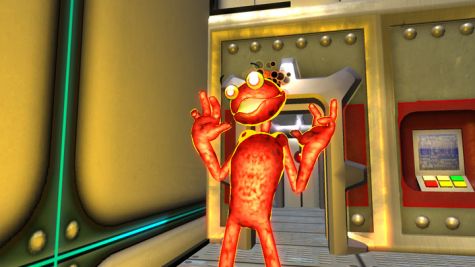 Splosion Man is a 2D side scrolling platformer where you make your way through some of the hardest and mind numbing levels ever imagined. There are a total of 50 levels to play in the main campaign and an additional 50 for multiplayer. The game presents itself nicely with sharp graphics and good humor but can begin to become quite tedious and frustrating very quickly.
 Armed with the ability to “splode” you must explode yourself in order to jump or damage enemies. Your only option is to hit any of the four face buttons (A, B, X, Y) to cause you to blow up and propel yourself slightly upwards. You can continue to explode up to three times before you run out of energy. Sliding on a wall or standing still will recharge you instantly. You will come across enemies that can also neutralize your character and cause you to become vulnerable to enemy attacks. The game has a very simple set-up to its gameplay and uses it in tons of great ways.
Each level is very different and comes with its own unique perks. Some levels will have you dodge laser shooting robots and blowing up rocket launchers while others will pit you against rising acid as you use explosive barrels to propel yourself to safety. To keep things interesting, there is also a hidden item in each level. There is an entire cake to be found and is usually tucked away in a corner or some place that requires much more time and effort to reach.
On paper the game can seem quite easy, but the difficulty in Splosion Man is one of its biggest drawbacks. The game starts out easy enough as it introduces you to each of the game’s several mechanics that you’ll have to master. However, the game is set on split second timing and it doesn’t leave room for error. You will need to nail every jump and every landing almost perfect if you want to proceed. The difficulty also starts off quite quick making you deal with some extremely intense stage only after a few levels in.
However, the game counters this in every way it can. Each time you pass a certain section, you will come across a checkpoint. You will find a checkpoint every 30 seconds to a minute on each level. The game also features no load times during the stages so you aren’t sitting there after each death just waiting for the game to load the level again. Lastly, it includes the Way of the Coward option which lets you skip a level you have died on repeatedly. This is nice to keep you interested and not let you become permanently stuck as you get more and more frustrated. And though the levels may get incredibly hard, there’s enough charm and jokes in here to make you keep coming back to try.
The game also features up to four player cooperative play with 50 multiplayer specific levels. This brings the grand total of different and unique stages to play up to 100. Each of the multiplayer levels can be completed with a minimum of two people. However, having extra players to help cut down on time always helps. The addition of another splosion man also adds new elements to play with. For example: exploding off of one another to reach higher and farther platforms. This does make the split second gameplay yet again harder but the inclusion of a timer you can use (pressing LT) can help you and your team coordinate your jumps and explosions. This addition is quite nice when playing online with someone who doesn’t have a headset.
The multiplayer can be done local or on Xbox Live but at this time the online play is quite broken. When two separate Xbox’s are playing with each other, the games desynchronize from one another. This causes players to see the game at two different times. For example, one player will see the platform close to him while the other will see it far away. This renders the gameplay useless as you’re already up against some of the hardest stages imaginable. Also, any lag experienced what so ever will completely ruin your chances of succeeding. The only way to play with someone else is locally. It allows the game to remain constant and there is no chance for a lag in connection.
Splosion Man also looks great. It is set up on a two dimensional plain but the camera moves and rotates enough to shows the 3D space around you. This gives the game a 2.5 dimensional feel to it. The movements in the camera are also quite appreciated to help you see further down the hallway or the entirety of the room you are in. The stages are very well designed and feature great vibrant colors. The splosion man will also glow brighter with the more energy he has and become a burnt crisp when exploding too much.
The game’s sound is also quite good and very funny. The splosion man will constantly make weird and comical noises as you play. He will also choose to run and sound like a monkey every now and then. Also the addition of Arnold Schwarzenegger quotes and references are just great. Lastly, the humorous and lovely Donut Man song found on several stages is a great surprise and a real treat.
Overall Splosion Man is a fun and hilarious game that makes it a steal at only 800 Microsoft Points. The variety of levels, hidden items found throughout the game and a harder difficulty to unlock give the game loads of replay value. However, the difficulty can be quite harsh but with the whimsical appeal and enough help to keep you playing, the game manages to be fun enough to make it worth struggling through. And though the online multiplayer being broken is a real shame, getting some friends over and playing locally is great and doubles the length of the entire game. Splosion Man is a great and charming game and despite a few draw backs, it becomes an easy recommendation for anyone.
Overall: 8/10
Thursday, July 30, 2009
Review: Halo Wars: Historic Battles - 7.5
Halo Wars: Historic Battles comes with four new multiplayer maps along with individual achievements for each one. The maps range from specific 1 vs. 1 game play up to 3 vs. 3. Each map looks quite different and are set up to make any a good choice to play on. The four maps are Barrens, Blood River, Glacial Ravine and Memorial Basin.
Barrens is the first of the four maps and is probably one of the best. It’s specifically a 1 vs. 1 map and sets you and the opponent on the opposite ends of a winding path. The path causes you to have to keep your troupes tight and close together. This can lead to some very risky business when encountering the opponent. Also, you will encounter small none-player controlled enemies throughout the map that when defeated can be used to create new bases for you. Along with several gunner outposts and a facility for restoring health located directly in the center, this is a great map. Having it designed so well for strict 1 vs. 1 play is great and it comes through quite well.
Memorial Basin is the only 2 vs. 2 map and it is constructed to look almost like a huge letter X with a thick center. Each player starts on a different corner and has access to an addition base location a little farther out. This is a great set up for a four person game due to the layout. Your teammate will be positioned beside you (as opposed to diagonally across from you) so they can help you gain control of one entire half of the map. Separating the teams could have left you weak when being attacked and not having an ally to come to your aid. Though Memorial Basin does work for the 2 vs. 2 style of play, it does feel a little dull since it`s essentially a big open area. It would have been nice to have a bit more corridors and sections around the outer area so that there could have been more strategizing involved.
Blood River is the second 1 vs. 1 map and my personal favourite. It is set up by positioning both you and the opponent on opposite cliffs. You must work your way down them and then across either of the two small bridges before proceeding up the opposing cliff to the enemy. There are also several field generators and resourcing harvesting facilities you can take over to use. Along with the inclusion of an extra base on each side of the bridges, you can get quite an army going before ever having to cross onto the enemy’s side. This map is set up very well for the 1 vs. 1 style of play and is quite a lot of fun.
The last of the maps is the huge, snow covered Glacial Ravine. This is the only 3 vs. 3 map to come in the Historic Battles content. Each team is set up on one side of the map as huge mountain ranges split the field in two. There is only one opening in the very center to use in order to reach the enemy. There are also energy shields you can get a hold of in the center to hold off some of the enemy’s advances. This map can be very fun when having to cram your entire army through the narrow entrance. There are also non-player teams stationed around the map that you can destroy in order to obtain more base locations. Overall the map is great and the mountain ranges really give it some character. It was nice to see this map not just become one giant open area.
The content as a whole feels great and each stage is different enough from the next to lead to some great times. You can really tell the developers but some thought into each one when landscaping each stage. Though there isn’t really anything that stands out about them so buying the content pack isn’t a necessity if you’re looking for something drastically different. Though the maps are new, they still follow the same basic arrangement as the previous stages and offer nothing incredibly special or fresh.
One big downside is that you can’t choose to only play on these maps when doing an online game. Searching for a game will result in a random map being selected depending on which content packs each player has purchased. This means that you will most likely end up playing a stage that came with the disc since there are more of them and less people have bought each piece of downloadable content. This is a shame since you won’t be able to use your content as much as possible. It would have been much nicer to see some sort of option to only search for games that use specific content packs.
The Halo Wars: Historic Battles downloadable content is a good and solid addition to the game. The majority of the maps feel varied and fun. Each one is set up to allow for the strengths and weakness of the game type it was designed for. The only downside to the content is that there is no way to filter out other maps when playing online. This means you must play either private games or local games to ensure you’re playing with some new content. The Halo Wars: Historic Wars map pack is a good deal but can be passed if you’re not a die hard fan of the game.
When it comes to my verdict, it completely depends on how much you like the game and how often you play. If you just come to Halo Wars casually now and then I wouldn’t recommend it. It doesn’t add anything new enough to warrant the purchase. However, if you play the game regularly then this new set of maps is a great buy and you’ll be in for a lot of fun.
Overall: 7.5/10
Friday, July 24, 2009
Review: Gears of War 2: All Fronts Collection - 9
 The Gears of War 2: All Fronts Collection is a downloadable content pack that contains every map pack released and an all new deleted scene from the original campaign. The collection is broken up into five parts: the Flashback, Combustible and Snowblind map packs and the all new Dark Corners map pack along with the Road to Ruins deleted scene.
 Each of the map packs can be used for online competitive multiplayer or you can take on Horde mode with a group of up to five people cooperatively. Along with new maps to play on, each piece of content comes with its own set of achievements to work towards.
The Flashback Map Pack is the first of the four pieces of content and features five maps that were originally in the first Gears of War game. The maps have also been updated with new textures and color to change the overall aesthetics quite a bit. For example, the Gridlock map that was quite grey and empty in the first game but now has been tons of vegetation and moss covering the map with much more green color to it. Along with changes such as the Mansion no longer being rained on and Canals being completely covered in snow really make the maps feel more alive and look better.
The second released map pack to be included in the All Fronts Collection is the Combustible Map Pack. This is probably the weakest of the downloadable content since it only comes with three new maps. Each of them is quite different than the others. The Flood map will have you playing on the ruins of a broken bridge as you are surrounded by Imulsion. This once again shows off some great vibrant color that was so rare in the first Gears of War game. The other two maps, Gold Rush and Fuel Station, are more of the fan favorites since the areas aren’t so tight and there’s more places to run around in. A very cool thing about the Fuel Station map is that is has areas specifically designed to use when playing on Horde mode. This is great since the developers are now designing maps more suited towards some of new additions to Gears of War 2.
The Snowblind Map Pack is the third released map pack and is one of the best. It comes with three all new maps and one returning from the original Gears of War. Each is very different from one another. Maps like Underhill will have you playing inside with tons of places to hide, while the Courtyard map – which is huge in size – is filled with wide open spaces and area to run. The greatest thing about these maps is that they all have an area that is secluded enough to be used in Horde mode. The Grindyard map is probably the fan favorite for this since it contains a central tower with tons of vantage points and only one entrance. As stated before, it’s great to see levels being developed not only for some fast paced competitive games but some intense and defense-focused Horde games.
The fourth map pack is Dark Corners and comes with a massive seven stages. Each is very different in layout and presentation. Maps like Allfathers Garden are rich with lush vegetation and vibrant green and blue textures, while Highway is quite red with dirty brown architecture all around. Not only are the maps different but they are all very big. Some feel like mazes with the number of passages and walkways you will be able to use. And though each map is big, some still focus on tight and narrow corridors to fight in. For example, maps like Way Station and War Machine have tons of cover and places to hide. Also, there are several maps that feature great secluded areas perfect for the Horde gameplay mode. One in particular is Nowhere. In here you can choose either the inside of several houses or the on top of the central building. To make things even better – every few minutes you will be hit with a dust storm that lowers your vision significantly. This adds another level to the thought process of how to take on the enemy and makes the map that much more enjoyable to play. A nice feature about this pack’s specific achievements is that they have you play certain waves of Horde on certain maps in comparison to which maps work better on this mode than others. For example, you need to be level 50 and complete all 1-50 waves of Horde on the Nowhere map – which is conveniently the best map for this game type; whereas you only need to be level 8 and complete waves 1-10 on War Machine – a map with no great secluded areas.
The last piece of content you will receive is the Road to Ruins deleted scene from the main campaign. What’s interesting about this is that you get the chance to try out the new stealth mode or play through it normally in guns blazing. The stealth mode has you sneak past each enemy and avoid being detected. However, it comes up as a bit weak. Since no new gameplay elements were really used, it ends up just being you walking by when an enemy turns its back to you. The game does change this a bit by making you create diversions by dropping creates every now and then but you still end up just slowly walking through. It comes off as a bit shallow.
The overall length of the chapter is relatively short as well. It’ll take around 20 minutes to finish it but this does increase if you play through it both ways or try a harder difficulty. The guns blazing mode feels much nicer since it allows you to fight an addition boss during the chapter. It also lasts longer than the stealth side since you must fight off each enemy instead of bypassing them completely.
Overall the deleted scene is a nice addition and when packaged with seven multiplayer maps, the Dark Corners downloadable content is a great deal. Dark Corners can be purchased by itself for 1,200 Microsoft Points but if you missed out on some of the previous map packs you may want to buy the All Fronts Collection. Priced at 1,600 Microsoft Points it’s a steal for getting every bit of content, especially when compared to the individual pricing of each one.
Overall: 9/10
Sunday, July 19, 2009
Review: The Conduit - 5
 The Conduit is a first-person shooter that utilizes good controls but is riddled with bland and sometimes dull game play. It features a great control scheme by using the Wii’s motion controller in several fun ways but sometimes back fires when put against intense and fast paced sections. And though the controls may feel good for the most part, the majority of the game seems somewhat slow and plan boring.
 The game centers around Mr. Ford as he battles invading alien races who wish to destroy Washington, DC and from there, take over the world. As you begin the game, you will be playing a level that is set closer to the end of the game, sort of a preview of what is to come. This does a good job of opening a lot of loose ends and causing questions to begin stirring. After which, you will find yourself set five days previous to the opening stage. From here the story begins to unfold.
You main tool (besides the game’s weapons) is the ASE, a glowing orb used to uncover secrets, hack computers, and communicate with allies. Using it will cause you to holster your weapon so you must choose wisely when it’s safe to put down your firearm. The best part of this object is there are several different kinds of secrets in each level and scanning with the ASE causes them to unlock. You will be able to find hidden doors, floating discs, hidden messages and etc. It will also act as a sensor and alarm when you come close to invisible enemies or landmines.
Finding all hidden objects in one level will unlock achievements for you. The achievements in The Conduit are a great addition to the game, especially since not many Nintendo titles feature these. Some achievements can be unlocked by simply completing a certain stage, while others will require you to rack up a certain number of kills with each weapon. This causes the game’s replay value to increase substantially as you will want to continue to search for hidden objects and use new weapons as much as possible.
The Conduit’s most unique feature when compared to the average first-person shooter is the Wii specific control scheme. Due to the console’s motion sensing capability, players are able to move their guns around as if they were holding them themselves. This works for the majority of the game but can really backfire when put up against some of The Conduit’s more intense and difficult sections. Though the movement for the gun feels nice, it sometimes feels quite slow, for example: when you need to turn around or look to the side quickly. This can become quite frustrating when having to focus on two different directions in more enemy heavy parts. Overall, the controls feel great when facing only a few enemies positioned directly in front of you, but doesn’t hold up for the harder – and far more important – segments.
There are also some controller waving controls to the game. Shaking the Wii remote quickly will have you perform a melee attack, while shaking the nunchuck will cause your character to throw a grenade forward. The grenade throws are probably the most intuitive as the angle you are looking will alter the flight path and distance completely.
The controls will probably feel the worst when playing the game’s online multiplayer. Though this can be helped by the fact that every player will be faulted by these controls, it still can be a bit of an issue. However, the multiplayer is set up nicely, allowing you to choose to play with only friends, only your region’s players or anyone around the world. This was a good option to allow for less lag and loads times if you choose a closer opponent. There are also many different modes to choose from such as the standard death match and capture the flag type modes. Added to this is a ranking system for each player. Every time you finish an online match, you will be awarded experience due to your team and personal outcome in the game. However, the one downside is that there’s no system in place to separate the high ranking players from the low ones. I found myself playing with some very skilled players on my first try to the online multiplayer; being matched with people closer to my skill level would have been much better.
The graphics also aren’t much to look at in The Conduit. The majority of the levels are quite generic and many of the textures are extremely dull to look at. There are even several areas you can see that had no extra textures, like fire marks or broken walls, at all since they weren’t reachable. Looking out the window and seeing bland and dull streets was quite disappointing. However, the enemies are quite nice to look at and though they don’t differ too much from one another, they are well detailed. This is most noticeable when fighting some of the game’s bigger boss creatures.
Along with some dull environment visuals, the games voice acting is terrible. Almost every line spoken sounds like the actors were very uncomfortable when they were recorded. This not only sets the stage up in a dull manor, but any dialogue that occurs through the mission is just a complete let down.
Overall The Conduit comes across as unfinished but this isn’t to say it isn’t a fun game. Some of its parts will feel great to play through and you will feel quite powerful as your character’s suit gets more upgrades and you find new weapons. The number of weapons in the game is great and with the inclusion or weapon specific achievements you will want to try them all out. And though the controls do feel slow and awkward in places, the game makes up for it by not throwing too many difficult moments towards you. The online multiplayer is a good addition to the game but with no proper format to its matchmaking and rank system, it can become tedious and overwhelming when faced against high level players. The Conduit feels like quite the average game, but in a time where great first-person shooters aren’t hard to come by, it doesn’t hold its own.
Overall: 5/10
Tuesday, July 7, 2009
Review: Bit. Trip Core - 8
 Bit. Trip Core is the second game in the Bit. Trip series and changes the control style completely from the original Bit. Trip Beat. Like the first game, Bit. Trip Core features fast-paced and catchy chip tune music along with an old 8-bit feel to the graphics. It presents itself nicely but like its predecessor Bit. Trip Core comes off as very difficult and doesn’t have enough explanations.
 In the first Bit. Trip game you controlled a Pong-like paddle and reflected incoming blocks by tilting the Wii remote. Bit. Trip Core changes this dramatically by now having you work completely with the D-pad and the 2 button (and occasionally the 1 button). The game remains in the music and rhythm genre by having you hitting blocks in time with the beat and in doing so will add more notes to the song playing. You control a red plus-sign-looking object in the center of the screen and when colored blocks fly past you, you must press the button in their direction (if the block is above you – press up) and hit the 2 button when they reach the line you have created. Each time you hit a block it plays a note and thus adds to the background music. Hitting enough of these will cause the music to become more complex and that much nicer.
This brings forward the biggest downfall to the game: the difficulty. The controls are easy to get used to, but the game has no form of tutorials so you’re left figuring things out for yourself. This causes the learning curve to become quite high. And with the level of difficulty the game can ramp up to, more explanations would have been a good idea. Though, once you do master the controls and begin to understand what all the meters mean, you will have a great time. It’s just a matter of struggling through your first few plays of the game as you face the difficult challenges while learning how to play.
Though the game does offer two player co-op for each of the three levels (and once again, it doesn’t ever explain this or even hint at it). In this you will both control the center plus-sign-object so that you can send out more lines and hit more blocks as they are shot around you. This does a great job of causing the game’s high difficulty to be a bit less of a challenge and can be quite a fun mode with your friend. The inclusion of a second player makes those crazy screen filling patterns much easier as you can now break down the sequence for two players. However, it would have been nice to see some sort of competitive mode added in this. Seeing how many more blocks and points I earn compared to my partner would have been nice.
The music in Bit. Trip Core is probably its biggest feature. Each of the three levels has their own unique song and the better you play – the greater the music. Playing poorly will cause the music to revert back to its original, basic tune; while playing well will add new tracks to the song and make it much more complex. Bit. Trip Core also keeps the black and white failing sections in it. These are parts where if you begin to miss too many blocks the screen loses its color and you’re left with a black background and white blocks to hit. At this point the music no longer plays and the only audio will come from your controller each time you hit a block. This adds another layer to the audio in the game as the Wii remote’s built in speaker is used in a great way.
The next best feature to the game is the style of graphics used to showcase it. As opposed to highly detailed areas and realistic filters that are seen in a lot of today’s video games Bit. Trip Core has a classic 8-bit look to it. Everything is made out of blocks (or “bits”) of solid and bright colors. The only complex display of images to be found in the game are the images playing in the background. Even then, upon a closer inspection, you will notice that they’ve just combined many blocks together to make a more detailed picture and to keep a retro feel to the game. The better you play, the more colors will be added to your screen. What was once a black background with a few images here and there will now be a screen flashing a rainbow of colors as new and more complex patterns of blocks are shot around.
The length of the game is also something of a double-edge sword. It only has three levels to it and thus – only three songs to play. It also has no support for online leader boards, which is quite odd considering the game is all about achieving new high scores. On the other hand, each song will last around fifteen minutes and the amount of diversity to each level’s block patterns is nice. This along with the ability to play with a friend can add a good level of replay value.
Overall Bit. Trip Core is a great successor to the Bit. Trip franchise and differs enough from the previous installment to warrant a purchase. Along with the lower price point and the choice for two player co-op, the game becomes that much more enjoyable. And though you may have to tackle a steep learning curve, once you’re accustomed to it, it becomes fun and easy. Bit. Trip Core is a great looking and sounding game and can be a fun way to kill fifteen minutes.
Overall 8/10
Sunday, June 7, 2009
Review: LifeSigns - 6
LifeSigns is a point and click adventure game with a focus on performing surgeries and other hospital related tasks. You play as Dokuta Tendo, a second year intern, as you establish your grounds as a surgical doctor. The overall story and presentation of the game is nice and can lead to some well thought out stories. However, the weird pacing presents some high difficulty sections and overall awkward game play.
The visual presence of LifeSigns is quite nice. Everything is hand drawn to showcase a manga-like feel to game. Along with this, the game presents itself in an easy to use user interface and basic map layout. Along with a fun look to the characters, the game becomes quite inviting and fun to watch as you read your way through the adventure and medical stories.
The majority of the game play involves you going through conversations with your fellow colleagues and patients. This ends up becoming a double edged sword as around 70% of the game is reading. You really have to enjoy story driven games in order to find enjoyment from LifeSigns. The bad part of this is that the game can become quite boring as you have to spend hours at a time reading dialogue and then selecting the next place to go to read more dialogue at. However, for the majority of the time, the conversations going on are either interesting, intense, or quite funny. The game also goes out of the way to put conversations in there that relate to nothing and are only there to give the player a laugh.
The sound and music in LifeSigns isn’t anything exceptional, but it does the job. During the intense conversations or surgeries you’re faced with high speed music while the depressing and low-key moments are presented with soft melodies. Though, during any conversation you will have to present the person with the correct documents or objects in order to continue through and when you present something correctly, you hear a “ding” sound. I quite liked this because it told me when I was proceeding correcting in the story and when I didn’t, I got a muffled buzzing noise. This was great in order to verify I was on track and doing things right.
The rest of the game will be centered around examining and performing operations on your sick and injured patients. During the examination you are to use either the Listen, Feel or Visual Inspection commands to find out what is wrong with the person. This sounds good on paper but ends up becoming quite the hassle and can take far longer than it should. The problem with these parts is that you have no hints on where to look on the patient. There will be times when they have a physical bruise and you can know to visually inspect that region, but when it comes to internal issues, you’re stuck with the guessing game. These sections can end up with you just randomly tapping your patient’s body until you finally find the right spot. There should have been much more guidelines to this.
During the surgical operation parts you must perform a specific surgery in a set amount of time. Not only are you working against the clock during this, but you have to make sure to perform all your tasks well enough to not kill the patient. To ensure you are aware of your patients remaining life, you are shown a meter and are notified of their heart rate. If these hit zero, or you’ve run out of time, you will fail.
Throughout these surgical sections, you will need to perform a sequence of tasks in order to save your patients’ life. These can range from stitching someone all the way to removing a blood clot in the brain. The majority of these operations can come off as a bit stressful but considering each task usually only requires a slow swipe of your stylus across the screen, it evens itself out. With this, each procedure becomes quite fun and you’ll notice yourself just rushing through that countdown. What started out as a 30 minute operation will quite short when you finally realize your done. These surgical procedures are the best part of LifeSigns as they can be incredibly stressful but very fun.
What sets LifeSigns back the most though is the pacing between each of these operation parts. The beginning alone will have you reading through almost 2 hours of dialogue before you finally reach your next surgery. And though the conversations are fun and informative, they really start to become overwhelming when you have to truck your way through several hours of them.
The worst part of this is that the surgeries can be quite hard and stressful. Some of the tools you use during the operations require specific actions and after a while of text, you end up forgetting how to perform. There were times when I almost lost because instead of using my tools correctly, I had to guess and check my way through the procedure. It would have been much better if the operations came more frequently, or I was I told more often how to go about them.
The aspect that sets LifeSigns apart from other hospital based adventure games is the inclusion of persuading mini game sections. In these you will have to try and convince another character to do something/tell you about something by showing them pieces of information or objects you are holding on to. This is probably one of the more engaging parts to the game since it involves you having to think which documents and articles you should show this person to try and get them on your side. If you show them the correct objects, you will be granted with bonuses. These can range from more dialogue sections to bonus time during surgical parts. Getting these wrong however can give you a disadvantage.
Overall LifeSigns comes up a bit short in entertainment. It presents itself nicely and is set up well enough to warrant a play through. However, it is still hard to recommend it considering all the other hospital based point and click adventure games out there. The awkward pacing caused me to feel either incredibly bored or overwhelmed when it came to the surgeries. If you really enjoy text heavy games, you will definitely find some enjoyment here. It has great story telling and makes sure to explore each of the presented characters. LifeSigns ends up feeling like it is being weighed down with all the extra elements instead of sticking to what it should have: surgeries and medical operations.
Overall: 6/10
The visual presence of LifeSigns is quite nice. Everything is hand drawn to showcase a manga-like feel to game. Along with this, the game presents itself in an easy to use user interface and basic map layout. Along with a fun look to the characters, the game becomes quite inviting and fun to watch as you read your way through the adventure and medical stories.
The majority of the game play involves you going through conversations with your fellow colleagues and patients. This ends up becoming a double edged sword as around 70% of the game is reading. You really have to enjoy story driven games in order to find enjoyment from LifeSigns. The bad part of this is that the game can become quite boring as you have to spend hours at a time reading dialogue and then selecting the next place to go to read more dialogue at. However, for the majority of the time, the conversations going on are either interesting, intense, or quite funny. The game also goes out of the way to put conversations in there that relate to nothing and are only there to give the player a laugh.
The sound and music in LifeSigns isn’t anything exceptional, but it does the job. During the intense conversations or surgeries you’re faced with high speed music while the depressing and low-key moments are presented with soft melodies. Though, during any conversation you will have to present the person with the correct documents or objects in order to continue through and when you present something correctly, you hear a “ding” sound. I quite liked this because it told me when I was proceeding correcting in the story and when I didn’t, I got a muffled buzzing noise. This was great in order to verify I was on track and doing things right.
The rest of the game will be centered around examining and performing operations on your sick and injured patients. During the examination you are to use either the Listen, Feel or Visual Inspection commands to find out what is wrong with the person. This sounds good on paper but ends up becoming quite the hassle and can take far longer than it should. The problem with these parts is that you have no hints on where to look on the patient. There will be times when they have a physical bruise and you can know to visually inspect that region, but when it comes to internal issues, you’re stuck with the guessing game. These sections can end up with you just randomly tapping your patient’s body until you finally find the right spot. There should have been much more guidelines to this.
During the surgical operation parts you must perform a specific surgery in a set amount of time. Not only are you working against the clock during this, but you have to make sure to perform all your tasks well enough to not kill the patient. To ensure you are aware of your patients remaining life, you are shown a meter and are notified of their heart rate. If these hit zero, or you’ve run out of time, you will fail.
Throughout these surgical sections, you will need to perform a sequence of tasks in order to save your patients’ life. These can range from stitching someone all the way to removing a blood clot in the brain. The majority of these operations can come off as a bit stressful but considering each task usually only requires a slow swipe of your stylus across the screen, it evens itself out. With this, each procedure becomes quite fun and you’ll notice yourself just rushing through that countdown. What started out as a 30 minute operation will quite short when you finally realize your done. These surgical procedures are the best part of LifeSigns as they can be incredibly stressful but very fun.
What sets LifeSigns back the most though is the pacing between each of these operation parts. The beginning alone will have you reading through almost 2 hours of dialogue before you finally reach your next surgery. And though the conversations are fun and informative, they really start to become overwhelming when you have to truck your way through several hours of them.
The worst part of this is that the surgeries can be quite hard and stressful. Some of the tools you use during the operations require specific actions and after a while of text, you end up forgetting how to perform. There were times when I almost lost because instead of using my tools correctly, I had to guess and check my way through the procedure. It would have been much better if the operations came more frequently, or I was I told more often how to go about them.
The aspect that sets LifeSigns apart from other hospital based adventure games is the inclusion of persuading mini game sections. In these you will have to try and convince another character to do something/tell you about something by showing them pieces of information or objects you are holding on to. This is probably one of the more engaging parts to the game since it involves you having to think which documents and articles you should show this person to try and get them on your side. If you show them the correct objects, you will be granted with bonuses. These can range from more dialogue sections to bonus time during surgical parts. Getting these wrong however can give you a disadvantage.
Overall LifeSigns comes up a bit short in entertainment. It presents itself nicely and is set up well enough to warrant a play through. However, it is still hard to recommend it considering all the other hospital based point and click adventure games out there. The awkward pacing caused me to feel either incredibly bored or overwhelmed when it came to the surgeries. If you really enjoy text heavy games, you will definitely find some enjoyment here. It has great story telling and makes sure to explore each of the presented characters. LifeSigns ends up feeling like it is being weighed down with all the extra elements instead of sticking to what it should have: surgeries and medical operations.
Overall: 6/10
Thursday, April 23, 2009
Review: Rhythm Heaven - 8
Rhythm Heaven is a fun and exciting way to spend brief periods of time with your DS and still feel like you’ve completed something. It captures the sense of the more main-stream rhythm games but still sets itself up as a mini-game collection. With more than 50 songs ranging from very different types of music, you’re in for a great time. Though one may find themselves a little thrown off when faced against its sharp learning curve and immediate difficulty.
The basis of the game play comes down to playing along with the game’s music by three main tasks: tapping, holding and flicking. At first glance this would appear as a very simple and an almost too minimalist style of game play as it gets too close to the style of mini-game collections. And though Rhythm Heaven is mainly a collection of mini-games, it structures them in a way that makes almost every one of them unique and engaging.
This brings up the best part of Rhythm Heaven: the music. The music can range from country and jazz all the way to rock or techno. Every song you play will be very different than the last and they’re all upbeat and enjoyable. It will be quite hard to go through the entire game and not find a song you really like. This truly makes Rhythm Heaven a game for everyone.
While listening to the music, you job is to perform actions that play along to the song’s beat. However, Rhythm Heaven actually has quite a high level of difficulty to it that makes itself relevant right from the get go. It becomes quite a difficult game due to its demand for a high level of precision when timing your taps or flicks. This steep learning curve is also the game’s biggest down fall. Going into a game aimed more towards the “casual” gamer and finding it this hard immediately isn’t a good thing. Even veteran gamers may fine themselves failing a couple times on the very first level.
To add to the difficulty, the game doesn’t do a very good job of teaching you what you need to do for each individual task. There is a practice mode that plays before each game (which you can skip if you wish) and for the most part it gives you a good understanding of what needs to be done. Though, there are some cases where I found that even though they told me what motion to perform, I still couldn’t get it. The problem is, Rhythm Heaven will tell you what to hit, but they don’t narrow down enough of when exactly you need to hit it. The majority of the time you’ll be faced with “tap after you hear ‘Yeah!’” And in game, this will sometimes mean to tap on the beat of “Yeah!” or the beat just after – the game doesn’t tell you which. There was even a case where it told me to tap on a beat that registered one too soon. This didn’t help the game as I was struggling on some of the tasks already.
Though it may be hard to first get into, once you have the basics down, it gets very fun. You will be ranked on each game and getting almost a perfect will net you a superb score along with a medal. You use these medals to unlock more mini-games to play with and, just like the main game, these games will require a sense of rhythm to play as well. These games can range from an entirely new song to play along with, or a variation on one you've already come across.
There is also a ton of different games to choose from in the main menu. Rhythm Heaven sets itself up in columns and after you play four songs, the fifth is a combination of the previous ones called the Remix. This lets you revisit the tasks you had to do in a new, fused together song. It also adds different images playing on the screen than the original song had. This adds up to the Remix mini-games being a great idea.
Along with the chance to play more than the main section of the game, you will be constantly reminded that you should try and score a perfect rating on past songs. Any time you achieve a superb score, the game will notify you after a while that you are good enough to try for a perfect. Playing the song perfectly will unlock you the song to listen to in the game’s playback feature. Though, it also comes with a bit of a risk. You only get one chance to play the song while going for a perfect score. This means that a perfect score can only be gotten when the game has notified you of it. So if you got 100% the first time you played, you won’t unlock the song. It also means that if you mess up your one chance, you need to wait till the game notifies you again. This was a bit of a disappointment as I found myself really enjoying a few specific songs and though I played them enough to achieve a 100% rating, I wasn’t unlocking my favorite songs.
Overall, Rhythm Heaven is a great game that, with enough practice, everyone can get into. It features a huge selection of music and wide variety of games to play. And though the game may start off a bit on the difficult side, it makes up for it with being fun and humorous. And the level of enjoyment you will get out of it will overcomes the difficulty as you will be playing the songs many times. The songs are all catchy and easy to enjoy while the inclusion of fun animations playing along with the music makes for a great time. Rhythm Heaven is a game that shouldn't be missed by any fan of the rhythm and music genre and will provide hours of entertainment.
Overall: 8/10
Thursday, April 9, 2009
Review: Pokemon Platinum - 9
Pokémon Platinum continues the long running series with an interesting story, hours of play time and a huge diversity of ways to play. The story is always changing and adds new elements and side quests to take on before finally reaching the end. This causes the length of the game to increase more and more. All new comers to the series will find themselves with a wonderful game; however, veterans may find it too similar to some of the past versions (especially Pokémon Diamond and Pearl).
The game starts you off in your home town as a soon to be trainer in the Sinnoh region of the Pokémon universe. You get to choose a gender and name and after a few events unfold, you get your first Pokémon. Pokémon are pet-like creatures that you will collect and use to battle other rivalling trainers. From there you are asked to travel the world searching for new Pokémon and taking on new challenges. As you continue your journey you will encounter new enemies, friendly allies and loads of ways to enjoy yourself in Sinnoh.
Your main task is to take on a total of 8 gym leaders in order to earn badges that will grant you access to the Elite Four – the final challenge of the game. In order to take on the gym leaders, you must first train your Pokémon so that they will become stronger along with catching new ones. Traveling through any uncultivated area, such as a forest, field or even a desert, will set up random encounters with wild Pokémon. From here you must try and either beat them to earn more experiences points or weaken them enough to throw a pokeball and catch them. As your team expands and becomes stronger, you will be able to take on the harder challenges with more ease and increase your amount of accessible options through the game.
Along with fighting your way through all the gyms and stray trainers who wish to take you on in the game. You also have several other choices of gameplay. The two more significant ones are Pokémon contests and the Underground area. Apart from these two, there is also a new online multiplayer mode exclusive to Pokémon Platinum.
Pokémon contests have you select one of your Pokémon to go through a talent show like game in order to win ribbons. In each contest you will have to dress up your Pokémon, which requires selecting specific accessories that relate to the theme specified. You will have to make your Pokémon dance, which translates to a very basic rhythm game. And last you’ll have to show off your Pokémon’s battling moves. This last stage is probably the most engaging since every move has a certain after-effect that will occur. These can range from altering the next rounds placements or even earning extra points. Pokémon contests can also be done through multiplayer against other people.
The Underground area is another fun way to spend time with your game or your friends. Once you receive the Explorer’s Kit in game, you can head into what is essentially an underground maze that can be accessed almost anywhere in the Sinnoh region. In here you can partake in treasure hunting mini-games along with building a secret base. Secret bases allow you to create a room and decorate it however you wish. When playing with friends, you will be able to see them in the underground maze as well and from there you can interact with their character. One of the fun things to do is to try and steal your friends ‘Flag’ from their secret base and bring it to your own – almost like a ‘capture the flag’ style of game. To increase the difficulty of this game, players can set traps on the ground that will activate when stepped on. These traps can vary from sending someone on a track all the way west until hitting a wall or even covering their DS screen with bubbles that they must pop with their stylus.
The online mode is called the Wi-Fi Plaza and it is a new addition to Pokémon Platinum that can only be accessed if you have a wireless internet connection. In here you can move around a room while other people playing online do so as well. However, your only option when trying to interact with them is asking pre-staged questions like “What’s popular?” This causes the tasks of “talking” to people to become quite dull and needless. You can also play a couple mini-games in here that involve using the stylus in certain ways. Playing these games well will upgrade your Tap Toy, an item you receive when first entering the room. The Tap Toy is an object shown on the bottom screen than when tapped will play a noise.
As these games do add a great deal of play time to your game, they also reveal Pokémon Platinum’s biggest downfall: it’s the same as the past Pokémon games. When comparing the game to either Pokémon Diamond or Pearl it essentially the exact same game. You do the same challenges and task and travel all the same routes on your journey to the end. This aspect is also very similar to every single Pokémon game in the main franchise. However, Pokémon Platinum does add a few new aspects to it that try and make it worth playing despite you owning Pokémon Diamond/Pearl or not. These additions are mainly some new trainers to face and a few new key characters to interact with throughout the game. The biggest addition is a plot change with the game’s main story arc in which you encounter the games three most legendary Pokémon. It may end up being an overlying change but it doesn’t come up enough and affect the rest of the game to be different enough. Though these aren’t necessarily bad additions, they are in no way worth playing through the game if you own either Pokémon Diamond or Pearl.
The graphics in Pokémon Platinum are great for the DS. It stays with the 2D side scrolling aspect but still looks great on the hand held. Though it does look identical to the landscapes and character models from Pokémon Diamond and Pearl. However, there are several minor differences added to Pokémon Platinum. The majority of these additions are some of the Pokémon stances are now different and some of the characters now wear different clothing. Overall, the graphics haven’t changed much but they still look great.
The sound in Pokémon Platinum is that great a feature and like the graphics, it remains the same as the past couple Pokémon games on the DS. This is another one of Pokémon Platinum’s disappointments as there wasn’t really anything new to the way the game sounded. It even used some of the sounds that the Game Boy Pokémon games had. It would have been nice to hear some new music and sound effects when playing what could be your fifth or sixth Pokémon game.
Though Pokémon Platinum has some major flaws if you’ve been with the series since the beginning, it’s still an incredibly fun game that can be enjoyed by all. If you are a new comer to the franchise or never got around to picking up either Pokémon Diamond or Pearl, now is your time to get in on the action. With all the different gameplay modes and secrets to unlock, you will be playing for 100+ hours before you complete everything. And if you try and catch all the overall 580 Pokémon, that will add that much more replay value. Overall Pokémon Platinum does what we’ve come to expect from the series, a great handheld gaming experience, it’s just a shame that there wasn’t enough new features to recommend it to everyone.
When it comes to my verdict, I place it under both Pass It and Buy It. I only put it as Pass It for the people very familiar with either Pokémon Diamond or Pearl. They won’t feel the game has enough in it to play through the same story again. However, I place it in the Buy It category for anyone who may have passed on playing those two. It’s a great experience that is different enough from the other Pokémon games, just not the first two DS titles.
Overall: 9/10
Friday, March 13, 2009
Review: Halo Wars - 7

Halo Wars is the latest game in the Halo series and the first to stray from the usual third-person shooter genre. It takes place in and early period in the Halo universe, many years before the events of the original trilogy. You will control your army through 15 levels as you encounter new foes and great new areas. It does a great job of making you feel like you are the most powerful military force alive, but sets itself back by really showing how basic of a game it is.
You command Sergeant Forge of Spirit of Fire warship as you build armies and take on the invading enemy. The game starts with you simply battling against the incoming Covenant but quickly switches to a race to save one of your own. This brings you to new worlds where you will encounter the Flood species as they try and remove you from their home planet.
Instead of the standard game play we have come to expect from the original Halo trilogy, Halo Wars is a game in the Real Time Strategy, or RTS, genre. An RTS game requires several sorts of management type aspects in order to proceed through. This can mean that you will have to set units to fight, while commanding units to search for resources or supplies. What causes an RTS to become so engaging is the constant and quick multitasking you will have to perform in order to complete your mission. This aspect creates a world where you truly feel like you are the master of everything.
Halo Wars does a great job of introducing new gamers to the genre who may not have much experience with an RTS. The tutorial is set up in a way that you are learning the most basic forms of game play. This will include things about commanding units, building objects and even how to move the camera appropriately. The inclusion of such a basic tutorial was a great idea considering this is the first time the Halo series has ventured to this genre and how it’s a big name release on a non-RTS heavy platform. Most people picking up this game due to their love of the past Halo games will be able to find their way around quite easily, whether they’ve touched an RTS or not.
This main concept of an RTS is where Halo Wars has its biggest drawback. Since most RTS’s are designed for a PC, there are a lot more commands you can input using the keyboard. Having the game made for the Xbox 360 causes it to feel like all these commands had to be either removed or squished so they would accommodate for the new controller.
The biggest example of this is the way the game has you move your units around. Normally you would want to be able to break up your army so that you can perform several actions at once. You can do this in Halo Wars, but it becomes incredibly tedious and time consuming. In order to move your units you must hit the LB button so it selects every one of them. You can change this up by hitting the RB button or the A button. The A button allows you to select one specific unit at a time while the RB lets you select only units you can see on screen. So in order to separate your group into smaller groups, you will have to grab every unit individually and move them far enough away from each other in order to use your local units command (RB button).
For the majority of the game, you won’t feel the need to ever break your units up for two reasons. The first is that it is quite an annoying process to have to go through and the second is that you never really need to. The game is a bit shallow in how it has been set up. Since you will be commanding one giant group, it’s easy enough to just move them from one area to the next, killing everything they come across. This causes the game to become quite easy in some respects since you can kill pretty much anything and survive indefinitely as long as you can keep building new units faster than your opponent. All in all, you may find it annoying since you don’t have much management options when it comes to navigating your team, but at the same time, you never really need them.
Apart from controlling your units, the majority of each mission will be about constructing a base. You can find base areas around the map, or you will start off with one. From there, the main part of the game comes in. You need to build different buildings in order to create the army that you will later use. Some buildings will be for creating resources or supplying energy (used to build things) while others can give you new weapons, ships or just upgrade past expansions.
This brings up some of the pacing issues in Halo Wars. From the beginning of the mission, your task will be stated clear for you. However, you can’t just rush another base from the get go hoping to finish this objective quickly. This is because you will only be geared with around one unit and enough resources to start a base and get a couple structures up. So instead of heading straight into battle, you need to start building an army. Getting from the beginning of the level to the top grade units can take around twenty minutes at most. This may not sound like such a long time, but for these twenty minutes you will only be sitting there watching the game create more ships for you. This can be extremely boring. You can however try and move ahead in the mission before getting a full army and it may work a few times. Though, when it comes to the online or harder levels, you will be better off stocking up before even thinking of moving. What this does is almost force you to have to wait and sit around while your station finishes upgrading everything completely. Afterwards, when your units are ready, you can rush into battle. From here, everything becomes fast passed and will only take a few minutes to wrap up. Each mission will go from about a fifteen minute wait, to a five to ten minute battle scene. In the end, you are looking at a long waiting period to a brief high-passed action phase.
When you do get your units rolling and everything has been upgraded, the game starts getting really fun. Controlling an enormous army and just obliterating the enemy is one of the best parts of the game. It is short however, but it’s great while it goes on. When in combat you get to use either a standard attack or a special ability. Special abilities can range from an RPG gun to bigger lasers or even specific melee attacks. For example, Spartans can jump on an enemy ship and take control of it. Watching these fights are quite great and it shows off how wonderful the game looks. The multitasking also comes into play a bit more than the rest of the game as you need to watch for your units to recharge their specials or create new ones all together. Destroying another base means you can now take it over and command two stations. This will help with the wait times as you can now upgrade things faster and get more units to command.
The campaign isn’t too much of a highlight to this game, but the multiplayer is. Since the majority of the single player mode will have you slowly moving a huge group of units from one area to another, it can sometimes seem too easy or just boring. When playing against a human though, you will find some great uses for such huge armies. Since you both know that bigger means better, you will get great battles pitting huge infantry against the others’. You can also play co-op head to head and have two buddies team up with you. This really shows the power of the system as 100+ units run simultaneously at another team until only one is left standing.
To showcase all this off, Halo Wars has some of the best graphics I have seen on the console. One might say it would even rival some of the PC’s RTS games it is so well known for. Everything looks great as it plays out during the missions. Units will all be diverse and unique while they will show the damage taken from combat. The smoke and fire look great when added to damaged structures. Some of the best looking graphics are when a huge structure explodes or during the cut scenes. The explosions are just great on when blowing up something huge and how much fire is spurted about. It really makes you feel like you demolished something very significant. The cut scenes are quite brilliant themselves making everything looks very life like. Halo Wars definitely has some of the best graphics on the Xbox 360 to date.
The sound in Halo Wars isn’t anything special. Since most of the time you will need to be listening to how your base is running, the background music isn’t a big feature. The game does a good job of updating you on how your team and structures are holding up. You will be reminded every few seconds of the status of the enemy or your own team. One of the weirdest features in Halo Wars though is the LB button. As stated, this causes you to select every unit you have in order to move them as one. Each time you hit this button, you will be notified with a voice stating “All Units.” What makes this so weird is that this never changes whether you are humans or playing as the covenant. To add to that, there is no variety in the way this is stated. Since you will need to use this command every few minutes, you will be hearing the same phrase uttered more times than one would like.
Halo Wars is a fun and easily accessible real-time strategy game for new or veteran fans. It does a good job of bringing you into the universe and have you feeling as powerful as you would playing any other Halo or RTS game, but sets itself back by some obvious and annoying flaws. The game requires not much thinking in terms of strategy which causes it to become a bit easy and sometimes boring. It even drags the multi-management aspect that RTS’s are known for away and simplifies it too much. With that said though, it doesn’t take away from the fun to be had here. Playing online with or against friends is some of the best times to be had. And commanding massive armies while creating numerous and important structures is great. If you can get past the ease of play along with some very awkward pacing issues, you will find Halo Wars a great addition to the long running franchise.
Overall: 7/10
Wednesday, March 4, 2009
Review: Fire Emblem Shadow Dragon - 9
Fire Emblem Shadow Dragon is the first of the Fire Emblem series to make it to the Nintendo DS. Although it reached state side as the fifth in the series, it is actually a remade version of the very first game for the Nintendo Entertainment System. Along with new levels, game play modes and updated graphics, Shadow Dragon does a great job of living true to what we have come to expect from series’ past.
You will begin Shadow Dragon by choosing one of two difficulties. Hard mode will set you against enemies that are as much as five times stronger than the lesser of the modes. The Normal difficulty setting will force you to have to play through the tutorial mode and is for new comers to the series. The good thing about the tutorial is how it is set up as a prologue to the game’s story. This does a good job of not making the game’s learning process too boring for veterans of the Fire Emblem series.
The prologue sets you in Marth’s, young and innocent prince, castle as it is being overrun by enemies. Marth is forced to leave while his sister stays to try and slow the enemy. Through his escape he is aided by the help of your first few allies. From here, the tutorial appears each time a new obstacle or skill appears. For example, it will teach you how to attack your enemies, use different weapons and items and how to interact with your surrounding area. As Marth makes his way to allied kingdoms for help, he encounters both new allies and new and more deadly enemies.
Shadow Dragon is set up as a tactical strategy game in which the game play only takes place while you are on the battlefield. During each of your conflicts, you will need to station your team around the area while you make your way toward the level’s boss. The levels are set up in a grid and each of your units can move a certain number of spaces in a horizontal and vertical fashion. Horse, Pegasus and Dragon mounted units can move much more father than free walking ones. On the other hand, characters wearing heavy armor will have reduced mobility compared to a light weight character. Each character can only move once a turn; then the enemy makes their progression towards you.
You begin combat when you move close enough to an enemy so they are within attacking range. Most weapons/characters need to be directly beside the enemy while archers and mages can attack from afar. This, along with your limited movements, causes you to have to think just where you should be placing your enemies so that they won’t be in the attack range of some approaching foes. A new improvement to Shadow Dragon is the ability to see the accumulated walking and attacking distance of all the enemies at once. Hitting the X button will cause a red section of the map to appear, any of your units in this area are open to an attack from the opponent. You need to find out when it’s okay to go in, and when you should be playing it safe.
Fire Emblem also does a good job of making sure the combat phases are both an important and enjoyable part of the game. The majority of the weapons are swords, axes and lances. Shadow Dragon teaches you that in a fight, an ax barer will have the advantage over a lance wielder, a lance wielder beats a sword barer and swords are good against axes. This, once again, causes you to make sure you are sending the right units to fight the right enemies. The last thing to make sure you keep in mind is the number of uses left for each of your weapons. For example, when you use your sword on too many enemies, it will break and you will have to find your way to an armory to buy a new one.
The combat in Shadow Dragon is probably the most important part as it can long lasting effect. Any time one of your team mates dies, you will lose them for the rest of the game. This is probably the feature that is most known about the Fire Emblem series. Unlike most Role Playing Games, when you lose a character you can always bring them back to life by the use of an item or certain points on the map. For example, in Final Fantasy you can bring dead allies back to life by using a Phoenix Down. In Shadow Dragon, a lost ally means it’s game over for them. This can cause quite an issue as you will miss out on story related scenes since they can no longer take place without the correct units. What makes this worse is because every unit is different and special in their own way; you could have grown attached to them. You may have spent the first three quarters of the game leveling up one specific guy to make him amazing and then lose that all in one minute. This also adds to the games replay value as perfectionists will want to restart the specific chapter so they can finish the game with everyone. It may add to this game’s difficulty but it makes you have to think two or three turns ahead. You have to be very strategic.
To help with this, Shadow Dragon adds the use of mid-chapter save points. Instead of always having to start at the beginning of the level, you can make a hard save somewhere within the chapter and begin again each time from that point. Though in order to activate these mid-level saves, you need a character to stand on a specific spot which can cause you to waste a turn with them.
When comparing the graphics of Shadow Dragon to the GBA versions of Fire Emblem, you won’t see too much of a difference. The maps and the characters look almost exactly the same. The only new addition is how the combat is now small cell shaded characters instead of flat two dimensional sprites. Though it still looks great and with the inclusion of nice hand drawn images to be shown during the between chapter cut scenes, it’s a great looking game for the DS. Shadow Dragon has also been cleaned up a bit when looking at how the game displays information. With the DS’s second screen, all the character information and stats are displayed on the top screen while the battlefield remains on the bottom. This is good because in order to play the game well, you will need to be checking enemy and ally stats quite often to know how to proceed.
The sound in Shadow Dragon is also a great asset to the game. When acquiring a new team mate, you will hear fast heroic music playing in the background. While the loss of an ally plays soft, slow paced music to drive home the depressing nature of the current event. The overall music adds to the game quite nicely as it matches the situation at hand. Hearing lively up beat music as you make your way through the battle fields and mow down the enemies makes you feel like quite a powerful army.
The downfall with Shadow Dragon is that it doesn’t bring many new or innovated features to the series. It has brought in the choice for some online modes and the idea of mid-chapter save points, but apart from this you are getting the exact same game play you’ve come to expect. In each game you need to keep the same things in mind and you need to know who is good against what. If you have played any of the other Fire Emblem games, you probably already have a good idea of all these and even which type of units you should put your time into when choosing who to level up. The levels and characters are of course different but with only a couple new classes to play around with, you’ll be playing the same game you played a few years back. This can be a downside to anyone getting tired of the game’s hardcore and tense nature, but if you haven’t put some time into this series in a while, Shadow Dragon is satisfy you quite nicely.
What hurts it even more is the online modes aren’t the best. Your main options are an online store and the multiplayer mode. The online store is a fine addition to the game since finding some powerful weapons mid game can be quite hard. The store updates itself everyday with new items, but at the same time, it loses items available to purchase. You need to check it quite often in hopes that the one item you are looking for is being offered. To make sure you aren’t taking advantage of the items for sale, you can only buy a select number of the more rare and powerful items.
The multiplayer mode is the most disappointing of all. Playing against your friends and seeing how well you can out smart other people online sounds like a great idea on paper, but it doesn’t pan out well in use. When playing against random people, you will almost always get matched up with someone either incredibly powerful or very weak. There is no system in place to match you up with people who are around the same level as your in game team. Finding an opponent with a powerhouse team or someone just starting out is no fun for either party. Though if you find someone of equal skill level, it then becomes quite fun.
Fire Emblem Shadow Dragon does what every game in the series has done: made you strategize more than almost any other game. If you are a gamer that plays games on a more casual level, this game isn’t for you. It’s designed to make you think and even second guess every move you make. You have to really know the game in order to be able to play it perfectly on it’s harder levels/difficulties. That begin said though, it does a great job of introducing you to the series. With the addition of the online store and mid-chapter save points, it’s one of the most accessible games in the series. With its visuals and fitting sound to accompany its wonderful story telling, it makes for great experience. And if you are a perfectionist when playing video games, this will lead to countless hours of replay value. Fire Emblem Shadow Dragon is a wonderful addition to the series and is welcomed nicely on the Nintendo DS.
Overall: 9/10
Subscribe to:
Posts (Atom)